What the wins confirmed, what fans already knew, and why the relationships at the heart of Sinners still matter.
Award season has a way of changing how we look back at a film. Once the dust settles, what’s left is the story itself — and how it actually stayed with us. This is a post‑award‑season reflection on Sinners: what the wins confirmed, what fans have been saying all along, and why the relationships at the heart of the film continue to matter long after the trophies were handed out.
When I published my original Sinners review, I had a feeling this film was going to linger. Not just as something we watched and moved on from, but as one of those movies people keep circling back to — quoting, debating, and holding up as the standard for what cinema can be.
Now, with award season firmly in the rearview mirror, it feels like the right moment to come back and say it plainly: fans have crowned Sinners “the movie of 2025,” and the accolades have only reinforced that claim.
If you missed my first thoughts, you can read my original Sinners review here →
Before getting into the trophies and nominations, it’s worth pausing to acknowledge that none of this recognition came out of nowhere — it was built on storytelling that resonated deeply with audiences first.
This isn’t just a victory lap — it’s a look at why Sinners still matters after the trophies.
Making Oscars History
Ryan Coogler’s Sinners didn’t just make waves during award season — it rewrote the record books. With Sinners, Coogler continues a career defined by cultural impact as much as craft — but this film feels like his most personal swing yet.
The film earned 16 Academy Award nominations, officially becoming the most‑nominated movie in Oscars history. The previous record of 14 nominations was shared by All About Eve (1951), Titanic (1998), and La La Land (2017) — titles that now sit alongside Sinners in an entirely new category of cinematic legacy.
That milestone feels especially significant given what Sinners is: a vampire film set in 1930s Mississippi that blends horror, history, culture, romance, and social commentary without ever diluting its voice. What could have remained a genre‑specific hit became a major box‑office success, proving its reach extended far beyond traditional horror audiences into the cultural mainstream.
Among its record‑breaking nominations were nods for Best Picture, Best Original Screenplay, Best Original Song, and Best Costume Design, alongside acting nominations for Michael B. Jordan (Best Actor), Delroy Lindo (Best Supporting Actor), and Wunmi Mosaku (Best Supporting Actress). Ryan Coogler also received a Best Director nomination, further cementing Sinners as both a creative and cultural force.
Records matter — but what made this season feel different was how consistently Sinners showed up across every major awards body.
A Clean Sweep Kind of Year
Sinners didn’t just show up to award season — it dominated the conversation.
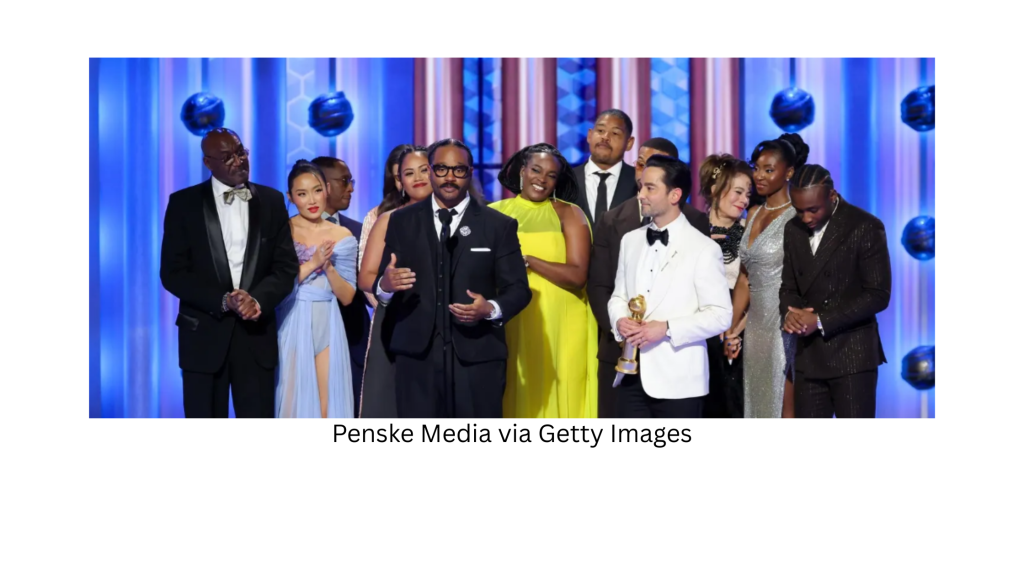
The film won the newly introduced Cinematic & Box Office Achievement Award at the Golden Globes, a category designed to recognize films that are both artistically bold and culturally massive. In other words, exactly the lane Sinners lives in.
At the Critics Choice Awards, the film took home multiple wins, including:
- Best Original Screenplay
- Best Casting Ensemble
- Best Score
- Best Young Actor (Miles Caton)
On top of those wins, Sinners racked up major nominations throughout the 2026 awards season, including seven Golden Globe nominations and an eye‑watering 17 Critics’ Choice nominations.
This wasn’t a fluke. It was sustained, across‑the‑board recognition — the kind that happens when a movie hits emotionally and culturally.
That said, the journey to that recognition wasn’t entirely smooth. For a time, many fans — myself included — felt genuine frustration watching how the major acting awards were unfolding. Michael B. Jordan’s dual performance in Sinners — demanding, theatrical, and emotionally layered — initially went without top individual honors during the critics’ circuit. When Timothée Chalamet won Best Actor at the 2026 Critics Choice Awards for Marty Supreme, the reaction was swift. Online, the word “robbed” appeared again and again, underscoring just how deeply audiences were invested — especially given the rarity of a Black actor carrying a dual leading role with this level of ambition and complexity. In a year that claimed to celebrate risk, the omission felt uncomfortably familiar.
But award season has a way of clarifying things once the noise dies down.
At the 98th Academy Awards, Michael B. Jordan won the Oscar for Best Actor for his dual roles as twins Smoke and Stack, a moment that felt less like a reversal and more like the inevitable conclusion to a conversation audiences had already been having all year. With the win, Jordan became the sixth Black actor in Oscar history to receive the Academy Award for Best Actor in a leading role, placing his name within a legacy that remains far too small — and therefore all the more meaningful.
In his acceptance speech, Jordan honored the Black actors who came before him, thanking prior winners and acknowledging the responsibility carried with the award. It was a moment rooted in gratitude, lineage, and awareness — mirroring the emotional intelligence of his performance in Sinners itself.
The Oscars ultimately did what earlier critics’ prizes had not fully managed: they recognized the performance as central to the film’s power. This wasn’t a career win or a consolation prize — it was recognition for this work alone. Two characters, two emotional cores, one actor holding the film’s moral and relational weight without turning either role into a gimmick.
That recognition was part of a larger night. Sinners ultimately won four Academy Awards at the 98th Oscars, bringing long‑overdue resolution to a season that had already cemented the film’s cultural impact. The early outrage didn’t disappear — it softened into something more satisfying: affirmation. Sometimes the industry catches up to what audiences already know. This time, it did.
Why the Relationships Hit So Hard
Awards aside, what people keep talking about with Sinners is the relationships. Not just the romantic ones, but the way connection, belief, loyalty, and trust are woven into every storyline.
This is a movie that understands something crucial: relationships aren’t neat. They’re layered with history, power, perception, and unspoken truths.
Two performances in particular continue to anchor that conversation.
Hailee Steinfeld as Mary: Identity, Passing, and Being Seen
Hailee Steinfeld’s Mary is one of the most quietly complex characters in Sinners. Mary is a mixed-race woman who is white-passing, constantly navigating the space between how she knows herself and how the world labels her.
In the story, Stack — her love interest — attempts to protect her by setting her up with a white husband, believing this will shield her from danger. But Mary doesn’t want safety that requires erasure. She knows where she belongs and who she loves. The tension is never resolved neatly: Mary’s presence at the juke joint becomes risky — because being seen alongside Stack means she will inevitably be read as Black, no matter how easily she passes elsewhere.
This thread aligns closely with critical analysis around Mary as one of the film’s emotional and literal survivors, particularly discussions of racial escapism and conditional survival — themes explored in depth by cultural critics examining Sinners beyond its surface narrative.
Mary’s experience mirrors real‑world conversations around race, colorism, and conditional belonging. It’s impossible not to think about figures like Meghan Markle — women who are read differently depending on who is doing the looking, and who are often forced to defend their identity from all sides. Even in my own life, I’ve felt that quiet pressure to “pick a side,” when the truth is that we are made of all the things that created us. Sitting with that complexity, rather than apologizing for it, is something Mary ultimately refuses to stop doing.
There was controversy surrounding Steinfeld’s casting, with some critics arguing she was “too white” for the role. What many overlook is that Hailee Steinfeld’s real-life heritage closely mirrors Mary’s story, making her uniquely equipped to inhabit that liminal space.
Steinfeld’s connection to Sinners went far beyond a typical leading role— Mary became a mirror into her own family history, a process she has spoken about publicly in interviews reflecting on race, identity, and preparation for the role (as discussed in Refinery29). The character’s mixed-race identity pushed Steinfeld to explore her own heritage in ways she hadn’t before; her father is Jewish, and her mother’s family includes Filipino and African-American roots. She has spoken about how researching the role led to meaningful conversations with her mom and deeper insight into her late grandfather’s life, helping her connect not just to Mary’s emotional landscape but to her own sense of self. This wasn’t surface-level research — it was a personal reckoning with belonging, lineage, and identity that informed how she embodied Mary onscreen.
Her performance doesn’t ask for permission — it simply exists, which feels intentional and powerful.
In real life, fans have also been celebrating Steinfeld as she navigates pregnancy during this chapter of her career, adding another layer of warmth to how audiences are revisiting her work in Sinners.
Wunmi Mosaku as Annie: Power, Belief, and Being Listened To
Wunmi Mosaku’s Annie might be my favorite performance in the film.
Annie is a hoodoo practitioner, a spiritual leader, and a woman deeply rooted in her community. What stands out most about her portrayal is not just her strength, but the way the film allows her to be believed — and asks the audience to do the same.
Too often, characters like Annie are dismissed, doubted, or treated as mystical window dressing. Sinners refuses to do that.
As the story darkens, Annie speaks — and people listen. No eye‑rolling. No disbelief. No undercutting her wisdom. Her love interest, Smoke, respects her authority without trying to dominate or explain it away.
There is something deeply satisfying about watching a woman be portrayed as powerful and desired, spiritual and grounded, without having to sacrifice softness or beauty. Interviews with Mosaku about Annie reveal how intentionally this character was shaped — not as a symbol, but as a fully realized woman whose voice carries weight, a perspective she expands on when discussing Annie’s authority, spirituality, and community ties in interviews with W Magazine. Annie isn’t just powerful — she’s trusted, and that choice feels quietly radical.
Like Steinfeld, Mosaku’s real‑life pregnancy has become part of the wider conversation around the film, with fans lovingly revisiting her performance through the lens of creation, legacy, and continuation — themes that already run through Sinners itself. That sense of legacy has spilled into real life, too — especially as fans connect the film’s themes with the women who brought them to life.
Award season moments like this only add to the warmth surrounding the film.
Why Sinners Will Outlast the Awards
Calling Sinners “the movie of 2025” isn’t just about trophies or box‑office numbers. It’s about the way the film trusted its audience to sit with discomfort, nuance, and emotional truth.
It didn’t flatten its characters to make them palatable. It didn’t rush past hard conversations. And it didn’t underestimate how hungry people are for stories that reflect real, complicated humanity.
History will remember the records — but it’s the relationships that keep calling us back.
Award season may be over, but Sinners feels far from finished. Some movies age quietly. Sinners is aging loudly, proudly, and exactly as it should. It didn’t just stay with us — it asked us to keep listening.
At Cupcakes & Tea, I write about films the same way I experience them: as stories that linger long after the credits roll. This space has always been about reflective cultural commentary — how movies intersect with identity, relationships, power, and the quieter truths we carry with us. Sinners is exactly the kind of film that belongs here.
 Cupcakes & Tea with Elizabeth
Leave a comment