Tag: abuse

  • When Love Isn’t Love: Breaking Free from Emotional Convenience

    When Love Isn’t Love: Breaking Free from Emotional Convenience

    Have you ever loved someone so deeply that it consumed you? The kind of love where you give everything—your time, your energy, your heart—only to realize they keep you around simply because it’s convenient for them?

    They lie. They pull you down. You start to see it happening, yet you stay, hoping that maybe this time they’ll mean it when they say they care. Sometimes, it even feels real—and that’s what makes it so confusing.

    You keep showing up for them, giving them chance after chance, but somehow, you’re always in last place. Maybe they even tell you that outright, and suddenly you find yourself competing for a spot you should have never had to earn. They break you, tear you down, and when you’re at your lowest, they lift you just enough to keep you there—never free, never whole.

    You cry while they sleep peacefully. You replay every word while they’ve already moved on to the next distraction. They hold onto the things that matter most to you and weaponize them whenever they start to lose control.

    If this sounds familiar, I hope you hear this clearly: don’t accept it.
    End the cycle. You deserve more than love that only exists when it’s convenient.

    “The soul answered and said, What binds me has been slain, and what turns me about has been overcome, and my desire has been ended, and ignorance has died.”
    The Gospel of Mary


  • Recognizing Manipulation and Narcissistic Behavior (and Protect Your Peace)

    Recognizing Manipulation and Narcissistic Behavior (and Protect Your Peace)

    I’ve been thinking a lot lately about how easy it is for manipulation to sneak into our lives — sometimes through relationships, friendships, or even at work. It doesn’t always start with obvious red flags. Sometimes it’s subtle — a guilt trip here, a twisted story there — until one day you realize something feels off.

    Let’s start with what manipulation actually means.

    Manipulate (verb):
    To manage or influence skillfully, especially in an unfair manner — like manipulating someone’s feelings.

    Pretty straightforward, right? But when you see it play out in real life, it can be messy and confusing.


    When Manipulation Turns Toxic

    Manipulative people tend to act with their own interests in mind. They might hurt you intentionally, then pretend nothing happened. They may even gather harmless bits of information from you — only to use it later when it benefits them.

    At its worst, this behavior can overlap with traits of Narcissistic Personality Disorder (NPD) — which often includes:

    • An inflated sense of self-importance
    • A deep need for attention or admiration
    • A lack of empathy for others
    • Difficulty maintaining healthy relationships

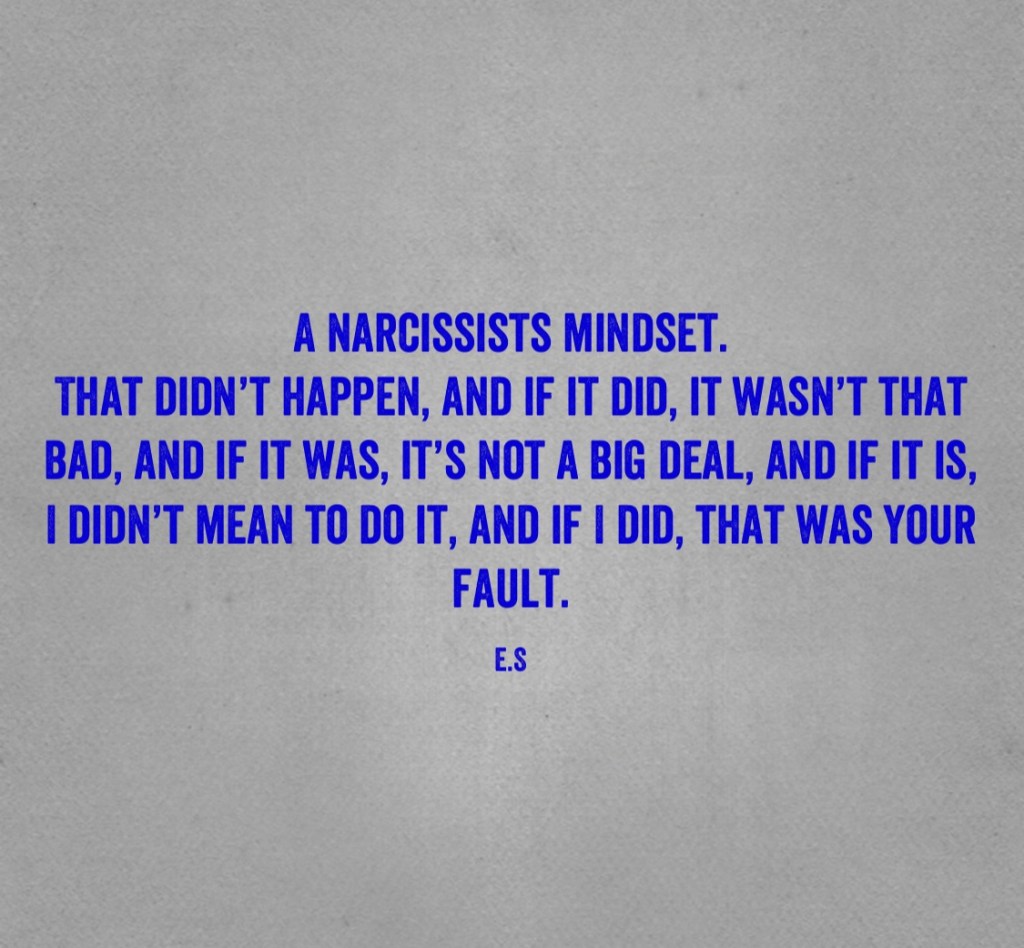
    What’s tough is that people who manipulate rarely feel genuine remorse. They might say they do, but their actions usually tell a different story. If you call them out, they’ll often deflect, deny, or make it seem like you’re the one at fault.


    The Emotional “Gotcha” Game

    Have you ever had someone deliberately push your buttons, just to get a reaction?
    That’s exactly what manipulators want — an emotional “aha!” moment. They’ll poke at your insecurities or twist your words until you snap, then say things like:

    “See, I knew you were overreacting.”
    “You’re always so dramatic.”

    Sound familiar? It’s a classic move to shift blame and make you doubt yourself. But here’s the truth — your reaction is valid. Their behavior is what caused it, not you. The best way to handle it? Stay calm, breathe, and don’t let them drag you into their chaos.


    Listen to Your Gut

    Your intuition is powerful. If you feel uneasy around someone or constantly second-guess yourself, that’s not “overthinking” — that’s awareness. Trust it.

    Manipulators often start off charming and attentive, giving you all the validation you could want. Then, little by little, they pull away — leaving you wondering what changed. That emotional whiplash keeps you hooked, trying to get back to the version of them that doesn’t really exist.

    You don’t owe anyone endless chances or explanations. Protect your energy. If something feels off, it probably is.

    Believe it! Trust your intuition.

    Examples of Manipulative Behavior

    Manipulative or narcissistic individuals may:

    • Intentionally hurt you, then act like nothing happened.
    • Use your words or vulnerabilities against you later.
    • Twist facts or shift blame with phrases like “That’s up to you, believe what you want.”
    • Refuse to take responsibility, making you feel like the problem.
    • Withdraw affection or attention to keep you chasing their approval.

    These patterns are emotionally exhausting — and you don’t have to tolerate them. Awareness is the first step toward protecting yourself and building healthier relationships.


    Final Thoughts

    No one is perfect. We all have moments where we act selfishly or fail to communicate clearly. The difference lies in whether someone is willing to listen, learn, and grow — or whether they keep repeating the same harmful patterns.

    The key takeaway? Stay aware. Trust your gut. Set boundaries.
    And remember — manipulation says far more about them than it ever does about you.


  • From Rape Culture to Consent Culture: What We Can Learn from Sweden’s FATTA Movement

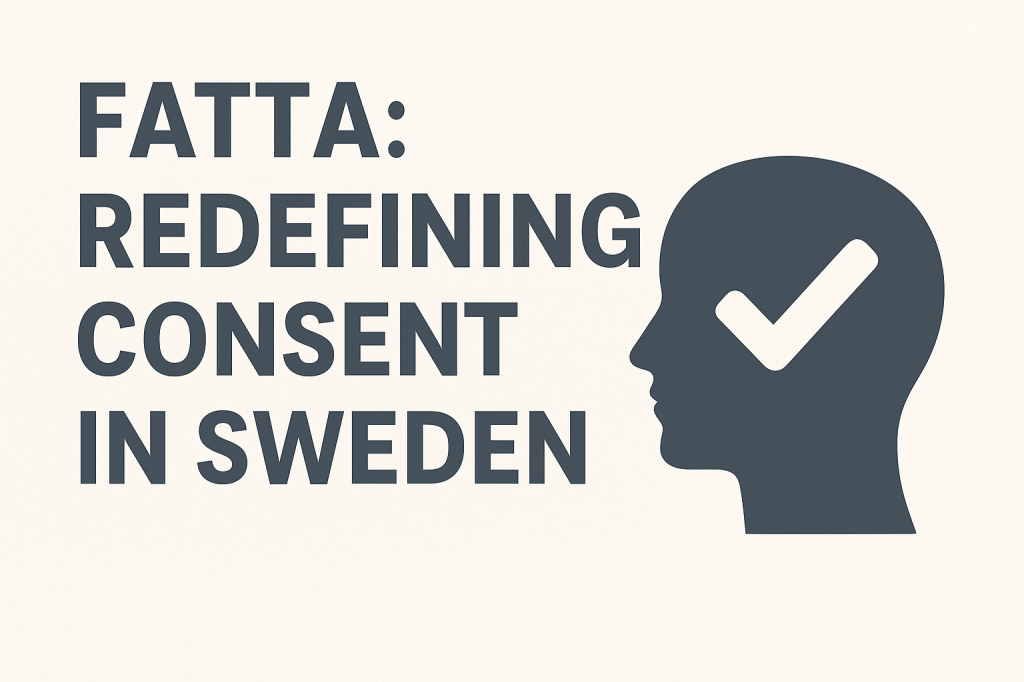
    From Rape Culture to Consent Culture: What We Can Learn from Sweden’s FATTA Movement

    I want to inspire Americans to care about reducing sexual assault, to help victims, and to change legislation with a focus on consent. I have chosen to focus on the actions of FATTA as an example of what can be done here in the USA.

    While studying abroad in Sweden, I learned about a powerful organization called FATTA — a Swedish nonprofit fighting sexual violence and advocating for consent in everyday life. FATTA was founded after a heartbreaking case in which three men accused of raping a 15-year-old girl were released because the court claimed her “modest” reaction — pushing her legs together — wasn’t enough to be considered rape.

    That moment sparked outrage and inspired a movement.

    According to Girls’ Globe, in 2012 there were over 16,700 reported sexual offenses in Sweden, with 98% of offenders being men and 95% of victims being women. By 2016, the number of reported assaults dropped to around 10,500, and while there are many factors involved, FATTA’s advocacy for consent culture has been a huge influence.


    What FATTA Stands For

    Sweden’s legal definition of rape once centered around violence and force rather than consent. FATTA challenged this outdated definition — pushing lawmakers to redefine sexual assault in terms of mutual agreement. In 2016, FATTA proposed a consent law, which emphasized that sex without consent is rape.

    They didn’t stop there. FATTA also launched FATTA Man, an initiative focused on men’s responsibility in changing social norms. Because sexual assault isn’t just a “women’s issue” — it’s a human one.

    Their advocacy gained national support. Some major music festivals in Sweden, previously plagued with assault reports, were even canceled until safer environments could be guaranteed. Bands like Mumford & Sons refused to perform until change happened.


    What About the United States?

    In the U.S., we still have a long way to go. According to RAINN, every 8 minutes, the victim of sexual assault is a child — and only 6 out of every 1,000 perpetrators are convicted.

    In Iowa, where I’m from, the law defines sexual abuse but doesn’t clearly define consent. You can read the full Iowa legal definition here. Shockingly, Des Moines Register once listed Des Moines as one of the top 100 sites for human trafficking in the U.S.

    The statistics are devastating:

    • 94% of women who’ve been raped experience PTSD symptoms.
    • 1 in 3 Native American women are victims of sexual assault.
    • Victims are 10x more likely to use major drugs and face lifelong trauma.

    These aren’t numbers. They’re real people — our friends, family members, coworkers, and neighbors.


    How We Can Create Change

    If Sweden can redefine its laws and culture around consent, we can too.

    Here’s how we can start:

    1. Educate and talk about consent — with our friends, families, and in schools.
    2. Lobby legislators to clearly define consent in U.S. law. You can find your representatives here.
    3. Create and support consent-based organizations that empower victims and change the conversation.
    4. Use your voice — whether that’s through social media, art, or advocacy, your words matter.

    It’s time we build a culture that values respect, equality, and consent.
    Let’s make it happen — it’s a party of consent in the USA.


    References & Resources

    Find Your Elected Officials

    FATTA: From Rape Culture to Consent Culture

    Girls’ Globe: A Campaign That Inspires Change

    RAINN: Rape, Abuse & Incest National Network

    BRÅ – Swedish Crime Prevention Council

    “Brett Och Station.” BRÅ – Brottsförebyggande Rådet. N.p., n.d. Web.

    Enqvist, Anna Falgén, María Rendo, Kupona Foundation, Shakira Choonara, and Gendercide Awareness Project. “FATTA: A Campaign That Inspires Change.” Girls’ Globe. N.p., 18 Mar. 2014. Web.

    From Rape Culture to Consent Culture. FATTA, fatta.nu/.

    Halpin, Hayley. “Swedish Music Festival Cancelled for 2018 following Rape and Sexual Assault Reports.” TheJournal.ie. N.p., n.d. Web.

    Rood, Lee. “Des Moines Identified as Top 100 Human Trafficking Site.” Des Moines Register. Des Moines Register, 16 Nov. 2016. Web.

    “Statistics.” Statistics | RAINN. N.p., n.d. Web.

    “Tea Consent (Clean).” YouTube. YouTube, 13 May 2015. Web.