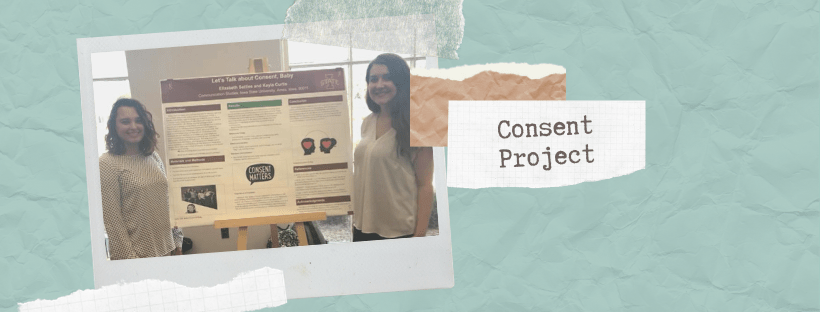
As an adult, exploring how young people communicate about consent has always interested me. I had a fantastic time collecting and analyzing data for my capstone project. This post features the final paper of a project that a partner and I completed. The results were presented in a final research paper and presentation. If you’d like to take a look at our paper, I’ve posted it below. For my thoughts on how we can change rape culture, take a look at Consent in the USA.
ABSTRACT
It’s no secret that casual sex is becoming more and more accepted in today’s culture. Unfortunately, sexual assaults and non-consensual sex are still very prevalent in today’s society as well. There is certainly more of an awareness of this subject, which has created a spotlight on the importance of acknowledging consent during sexual activity. Women and men are beginning to build a culture centered on consent. This qualitative study researches the communication aspect of consent among young adults. This study draws from interviews regarding the communication behind consent of eight young adults. Major findings from these interviews indicated how the nature of the relationship, the timing of the conversation, and verbal and nonverbal messages are all critical factors when considering a conversation about consent. This study aims to help bring awareness to the importance of having a conversation about sexual consent with romantic partners.
INTRODUCTION
According to the National Institute of Justice & Centers for Disease Control & Prevention, Prevalence, Incidence, and Consequences of Violence Against Women Survey, 1998, “1 out of every 6 American women has been the victim of an attempted or completed rape in her lifetime.” Today many activist groups fight for women’s rights, and as a subtopic of that issue comes consent. For example, FATTA, a Swedish organization, fights to change rape culture to consent culture. In popular media, awareness of rape culture and consent has become a prominent issue (FATTA, n.d).
Women and men are beginning to concentrate on having a culture that is consent oriented… In the past, women were ostracized for sexual behaviors, whether the behavior was agreed upon by both parties or was forced. Consent is now becoming a conversation that happens in homes, political arenas, mainstream culture, and social media. This burst of conversation brings up how difficult conversations were handled in the past and how conversations are happening in the present. Consent can bring out discussions of rape, violence, and relationships, which can be difficult topics.
LITERATURE REVIEW
Previous research has found that difficult conversations can impact the health and structure of a relationship (Keating, D. M., Russell, J. C., Cornacchione, J., & Smith, S. W, 2013). Regarding consent, another study looked at the impact of sexual consent between men and women. The researchers found verbal statements by women that communicated consent were clearer than communicating with non-verbals to men (Lim, Grace Y., & Roloff, Michael E, 1999). In the past, consent has been an important topic to understand, as well. For example, one study looked into consent in the health field and expressed the importance of properly explaining consent to the patients that participated (Rosser, et al., 2009). A previous study, that focused on difficult conversations between offenders and their probation officer, found that women who were scared or worried about their freedom, would not initiate conversation. The researcher’s studied why these difficult conversations were not initiated. However, when offenders perceived their probation officers as having the proper resources to assist them, they were more likely to engage in difficult conversations (Spencer, 2013). This applies to our study, and overall, this leads us to see that men tend to have a powerful position in American culture, similarly to how probation officers have power over the female convicts. This culture can influence how we communicate about difficult topics such as consent.
Young adults that are sexually active seem to be following a culture of “hooking up.” Young adults are not necessarily in relationships or even know the person, but may still be involved in sexual activity. This causes issues of consent when it comes to said sexual activity. The goal of this study is to answer why or find how, if at all, young adults communicate about consent in sexual encounters and relationships. We expect to find that young adults may start to communicate about consent as the relationship grows rather than in the initial developing stages of a relationship. We figure that when a young adult feels their sexual partner is accepting, it is more likely that a potentially uncomfortable conversation about consent will be held before the sexual encounter. Therefore, if it seems neither party is comfortable having the discussion, consent will not be verbalized or given in these instances. In some cases, this can lead to confusion due to cultural norms.
Additionally, we think that culture plays a large part in this ambiguity over consent. A study researching German heterosexual men who consume pornography more frequently are more likely to engage in dominant male behaviors, including playing out situations of forced sex (Wright, 2015). This desire to play out situations of forced sex can be seen as discouraging for having a conversation about consent and may be less receptive to its importance.This research study is unique by researching how young adults communicate about consent in a culture that encourages “hooking up” but is shifting towards a consent culture. Uncertainty Reduction theory will guide this study. This study’s focal point will be mainly on how young adults communicate about consent, if at all, and when that conversation takes place.
HOOKUP CULTURE
Today, many young adults in America are finding themselves in a hookup culture that is starting to shift towards a consent culture. For the purpose of this study, the definition below is how we are defining hookup culture.
==== “Hookup culture is the dominant relational context of sex is of a casual nature. Casual sexual encounters involve people engaging in oral sex, anal sex, or coital sex with someone they are not dating or in a romantic relationship with. Moreover, there is an understanding that no commitment is involved and that none should be expected from either partner” (Fielder & Carey,2010; Owen, Rhoades, Stanley, & Fincham, 2010).
Hookup culture has been studied but is a recent topic within the last decade. This research study defined hookup culture similarly as the definition above.” Casual sex can take place as a one-time occurrence or can occur multiple times with the same partner, but the premise of no commitment remains intact” (Heldman & Wade, 2010). While researching hookup culture, we found that most of the data started around 2009. “A hookup culture, the predominant form of engaging in sexual relations is the hookup—that is, the act of having sex with a partner on casual terms and outside of a committed romantic relationship” (Grello, Welsh, & Harper, 2006; Stinson, 2010). So in all, there seems to be a consensus that hookup culture involves sexual activity without commitment. In a study examining first date goals, men were more likely to be pursuing the goal of having sex more often than women. Women are more likely to go on first dates with the purpose of companionship (Mongeau, Jacobsen, Donnerstein 2007). This study’s findings can contribute to the expectation of consenting to sexual activity without actually verbally consenting to sexual activity.
Over the past decade, several popular books have been published dealing with the topic of difficult conversations (Cloud & Townsend, 2005; Dickson, 2006; Kosmoski & Pollack, 2005; MacDonald, 2004). Our difficult topic will be on consent and how young adults converse about consent in a hookup culture that is shifting towards a consent culture. This study will consider difficult conversations, as written below. “Difficult conversations have been described as emotionally-charged discussions characterized by uncertainty” (Browning, Meyer, Truog, & Solomon, 2007). Uncertainty Reduction Theory proposes that people need to reduce skepticism or uncertainty by gaining information about one another. Gaining information is part of relationship development (Berger & Bradac, 1982). In a study examining communicating about safer sex involving transgender adults, participants described new sexual relationships as being “highly uncertain and, thus, inherently risky and viewed safer sex communication as a means of uncertainty and risk reduction” (Kosenko, 2011). Uncertainty Reduction Theory predicts individuals will use multiple forms of information-seeking methods when interacting with another individual for the first time (Berger & Calabrese, 1975). We propose that uncertainty between two potential sexual partners should lead to a conversation regarding consent of sexual activity.
Uncertainty in relationships will spark information-seeking behaviors, and that uncertainty reduction will increase the level of intimacy between interpersonal relationships (Theiss & Solomon, 2008). Also, individuals do not like to feel uncertain about interpersonal relationships and are motivated to resolve uncertainty if future interactions are anticipated, and the relationship is seen as rewarding (Theiss & Solomon 2008). If a future interaction of a sexual nature is considered rewarding and the goal of a first date, we figure that because of the shift towards a consent culture, more uncertainty will arise from a lack of conversation about consent. And because of this uncertainty, individuals are more likely to participate in a potentially difficult conversation about sexual consent to alleviate anxieties stemming from uncertainty.
SEXUAL CONSENT
For this study, we will define sexual consent as sexual activity, kissing, oral, or penetration that has been agreed upon by all parties. “This paper conceives of sexual consent as knowing and voluntary agreement to have sexual intercourse. To understand how sexual consent is attributed, the authors examine the relative impact of nonverbal, verbal, and contextual cues on perceptions of impaired judgment, coercion, consent, appropriateness of sexual intercourse, and rape” (Lim, Grace, & Roloff,1999). The increase undoubtedly aids this rise in sexual activity among uncommitted interpersonal relationships in internet dating users. This rise in use has raised concerns about the potential dangers of meeting unfamiliar people online and the threats of sexual predators (Gibbs et al. 2011). This threat makes a conversation about consent vital to ensuring both partners’ comfortability and agreement to sexual activity. In a study observing men’s and women’s behaviors in a speed dating setting, men’s movement led to a more dominating perception by using “flamboyant” hand gestures and large motions to exemplify their conversation. In reaction, the women in the study had body movement that was more docile and reserved. Women also engaged in nonverbal behavior that reinforced the men’s communication with actions such as nodding in agreement or approval, smiling, and kept their eyes on the man in front of them (Deyo, Walt, & Davis 2011). This male domination and female submission in a date setting can make the assumption that both parties consent to sexual activity when that may not be accurate. By having an open conversation about consent to sexual activity, uncertainty reduction theory will be at play. Communication “plays a key role in this process as it is through communication that uncertainty is reduced. As such, interpersonal relationships develop among strangers as interactants communicate to reduce their uncertainty and get to know each other by gaining greater knowledge and mutual understanding” (Gibbs et al. 2011). We believe that uncertainty regarding consent is on the rise because of the shift towards a consent culture; thus, conversations about consenting to sexual activity will also be on the rise.
RATIONALE
This research study aims to add a communication view of a topic that has not been extensively studied by communication scholars (Harris, 2018). Our study constructs include hookup culture, sexual consent, and difficult conversations.
RQ1 How do young adults negotiate communication about sexual consent with potential romantic partners?
Previous research has found that difficult conversations can impact the health and structure of a relationship. (Keating, D. M., Russell, J. C., Cornacchione, J., & Smith, S. W, 2013). Regarding specifically consent, another study looked at the impact of sexual consent between men and women. The researchers found verbal statements by women that communicated consent were clearer than communicating with non-verbals to men (Lim, Grace Y., & Roloff, Michael E, 1999).
In a study observing men’s and women’s behaviors in a speed dating setting, men’s movement led to a more dominating perception by using “flamboyant” hand gestures and large motions to exemplify their conversation. In reaction, the women in the study had body movement that was more docile and reserved. Women also engaged in nonverbal behavior that reinforced the men’s communication with actions such as nodding in agreement or approval, smiling, and kept their eyes on the man in front of them (Deyo, Walt, & Davis 2011). This male domination and female submission in a date setting can make the assumption that both parties consent to sexual activity when that may not be accurate. Due to this difference in power in conversations, we expect to find that potential romantic partners are more likely to have a conversation in one way or another about consent when the female partner senses that the male will be receptive to her message. When there is uncertainty about how one partner will receive the message, we believe that messages about consent will be less clear and apparent, leading to potential misunderstanding or misinterpretations about consent.
METHOD
This research study was conducted through face-to-face interviews. The interviews took place in a private room and lasted between 15 to 30 minutes. Participants had to be between the ages of 18 through 25 and sexually active to participate. Research in this field has been done with both qualitative and quantitative methods. For this study, we believe qualitative will work best since previous research has used both methods, but has not extensively been researched by communication scholars. Since communication scholars have not researched this topic extensively, we must start with qualitative research (Harris, 2018). In support of this, another study made note that their quantitative study was informed by previous in-depth qualitative studies (Smith & Aubrey, 2008 )Kosenko, 2011, interviewed transgender adults about safer sex with a qualitative interview. This study recruited participants by posting information on online bulletins. This study chose to do qualitative interviews with a topic concerning sex; we did something similar in our research. Stepp, 2007, used qualitative interviews for her study on hookup culture, which is a piece of this study. Paul, E.L. & Hayes, K.A., 2002, used qualitative interviews to look into hookup culture with college students. In all, previous studies investigating hook up culture, and qualitative interviews were at the core of their methods.
PARTICIPANTS
Participants were willing males and females, who were between the ages of 18-25 and, have been sexually active. To recruit, information was given out about participating in the study to classmates and to peers in our personal circles. Then, posted information regarding the study on our personal social media platforms. Finally, we received participants by referral. We recruited participants from ages 18-25 due to looking at a specific generation of people who have been sexually active during this research study.
Overall, we recruited 8 participants. The ages ranged from 21 years to 25 years old, with the median age being 22.6 years old. There were two male participants and six female participants. All of our participants identified themselves as white or Caucasian. Educational backgrounds from these individuals ranged from high school graduates to college graduates.
PROCEDURES
For the interviews, a semi-structured interview was best for this study since this is a sensitive, interesting topic. The interview worked best to stray from the interview questions at hand to elaborate on their answers using the secondary questions.
During the interview, the interviewer collected the participant’s age, gender, and what generations they considered themselves to belong to. This interview was centered on how participants felt about previous experiences that relate to how they negotiate or communicate about sexual consent in today’s changing society. This relates to our research questions since they focus on communication regarding sexual consent with potential partners. Since our interviews as semi-structured and voluntary, some interviews may run at different lengths. However, interviews lasted around 20 to 30 minutes. Participant responses were recorded through audio and we took notes as well. The audio recordings are transcribed using Temi.com. This website transcribed the audio for us. Mistakes were still made during the process, so we listened to the audio while revising the transcription from temi.com, to correct it. In order to participate, participants were required to be audiotaped. We did not have any objections. It was made clear while recruiting participants that it will be audio recorded. In addition, it was made clear that their given names would not be used. A random name selection was used to provide anonymity.
To transcribe our videos we used the website Temi.com and went through and corrected the transcripts to match our audio with any discrepancies. Currently, we have 40 pages of transcript.
DATA ANALYSIS AND VERIFICATION
Narrative analysis was used for this study. Many participants shared experiences and past events. These narratives were important to the research because it helped the researchers discover how consent was thought about and discussed on an individual level. Per interview we had around 7 pages of notes. During the interview, participants were asked:
How did you and your partner go about discovering if the other wanted to engage in sexual activity?
This allowed and prompted storytelling. This research study used member checking and peer debriefing for verification procedures. Member checking was executed by research partners swapping transcripts and ensuring there is a consensus on the coding of the interview. Additionally, participants were shown the transcripts that include our themes and labels. Then, participants were able to give their opinion on whether their thoughts were captured accurately.
RESULTS
This study conducted interviews on the topic of consent from a communications point of view, that has not been studied extensively in this field. Themes found during this study were relationships or timing, nonverbal communication, and verbal communication. In all, we interviewed eight people. These identified themes work together to bring clarity about at what point do individuals feel comfortable having a conversation about consent depending on the nature of the relationship, and also how that conversation is negotiated whether it be nonverbal or verbal communication.
Non-direct Communication
The first theme is non-direct communication, which deals with nonverbal communication. This came up within every interview. This was a cue for how young adults would communicate about consent. Nonverbal communication is defined as communication without spoken word. Non-direct communication was identified from the transcript with words such as, non-verbal, nonverbal zone, body language, unspoken action, unspoken signals, and movements. Agatha, one of the participants mentions nonverbal communication in the quote below.
“There were other times where it was not unspoken and it was just like those low movement towards something. So, if like if you were not OK with that, there was a chance for you to say, ‘Hey, no, I’m not cool with that.’ But mostly it was just like semi-spoken, usually.’”
Direct Communication
Direct communication is another theme found in this study. A part of direct communication is verbal communication. Verbal communication is the spoken word. This direct communication also implies that the messages about consent were not vaguely described. Individuals who described relationships where both partners were committed to each other described the need for at least the initial sexual encounter to have a clear “yes” from both partners.
Words such as verbal, explicit, verbal agreement, verbal message, ask, the word “okay”, talk, and face to face. Below, there will be an example for our participant when asked how they define consent.
“It is informed. So, you know what you are agreeing to. So, if you say yes, you won’t be surprised with what you’re getting into. But it has to be verbal. It has to be clear and uncoerced… It’s really important to be explicit”
In all but one interview, participants stressed the importance of a verbal and explicit message about the act of sexual activity they are hoping to participate in.
Relationship Timing
Relationship timing is another theme of this study. To this study, it is considered to be the level of comfort felt in the relationship.
In this study, words associated with relationship timing include uncomfortable, comfort, trust, awkward, embarrassing, open, transparent, knowledge, education, and nurturing. One participant described his experiences with how he approached talking about wanting to engage in sexual activity with his new girlfriend. He believes he was able to have this conversation with such ease because he had known his partner for a long time. At the time of the conversation about consent, the two had not officially begun dating. However, they had known each other for years and had been close friends, and the participant described wanting to be sure his partner felt as comfortable as possible.
In this study, we found it is important to mention that there seems to be changing norms about consent. One thing noticed is that communication about consent is changing. More people are moving towards a more direct communication style regarding consent. Currently, it seems we are shifting to making consent a communication norm. As this hookup culture increases, there is an increase in communication about consent. For example, today, there’s communication about consent in education and the media. Many participants noted how important that think consent education is, whether that be mentioning it during sex education in school or in a conversation at home with a child’s parents. A general consensus on the importance of learning about what consent is at a young age was evidently important to most of the participants.
DISCUSSION
The purpose of this study is to provide information about how young adults negotiate communication about consent. Private interviews were conducted for this study, and the length of time was around twenty minutes. Participants were willing male and female, young adults who were under the age of twenty-five.
“Teach Skills to Prevent Sexual Violence,’ the report says colleges should focus on ‘providing definitions of consent’ and ‘implementing affirmative consent policies’” (Dills, Fowler, & Payne, 2016). From this quote, which refers to an article from the Centers of Disease Control, our study’s participants’ comments on having knowledge and education about consent is a discussion around reducing uncertainty by using educational tools to communicate about consent. “By including these statements under a heading about prevention, the CDC implies that if students know enthusiastic, verbal agreement constitutes consent, colleges can prevent rape” (Harris, 2017).
“In Asking for It, a Media Education Foundation video shown at many US universities, philosopher Harry Brod advocates that consent must always be explicit and verbal” (Jhally, 2010). From Brod’s research study, this study can conclude that the importance of verbal communication regarding consent to be explicit and verbal, as mentioned by the participants.
According to, Harris 2017, “When asserting consent must be verbal, Brod says, ‘The danger in body language is that it’s just too easily misinterpreted.’” Many participants discussed that verbal communication was preferred over nonverbal communication. This seems to align well with what Harris cites from Brod. As previously stated, from a study that observed men’s and women’s behaviors in a speed dating setting, men’s movement led to a more dominating perception. In reaction, the women in the study had body movements that were reserved. Women also engaged in nonverbal behavior that reinforced the men’s communication with actions such as nodding in agreement or approval, smiling, and kept their eyes on the man in front of them (Deyo, Walt, & Davis 2011). This male domination and female submission can contribute to the assumption that both parties consent to sexual activity when that may not be accurate.
Some limitations to be noted are concerning the demographics of our participants. Due to the pool of participants being small, there were no homosexual individuals interviewed for this study. Due to society’s standard of coital sex, as opposed to other sexual acts and being a part of a marginalized group, results may be different. Future research should discover if same-sex couples negotiate communication about consent any different than heterosexual couples. Additionally, all participants identified as white or Caucasian. Future research should ask if people of color to express concerns or reduce uncertainty about their sexual relationships and consent the same way or be sure to include more marginalized groups in the study. Sexual consent and navigating a form of conversation about consent is every sexually active person’s responsibility. With an increased occurrence of individuals not only assuming their partners are consenting to a sexual act, but the rate of non-consensual activity will also naturally decline. Due to the hookup culture we are in, and we think that even if these conversations may be difficult, they are worth having to ensure both partners want the activity.
REFERENCES
Altman, I., & Taylor, D. (1987). Communication in interpersonal relationships: Social
===Penetration Theory. In M. E. Roloff and G. R. Miller (Eds.), Interpersonal processes: ===New directions in communication research, 257-277. Newbury Park, CA: Sage.
===Berger, C. R., & Bradac, J. J. (1982). Language and social knowledge: Uncertainty in ===interpersonal relations. London: Arnold.Berger, C. R., & Calabrese, R. J. (1975). Some Explorations in Initial Interaction and ===Beyond: Toward a Theory of Interpersonal Communication. Human ===Communication Research, 199-112.
Browning, D. M., Meyer, E. C., Truog, R. D., & Solomon, M. Z. (2007). Difficult ===conversations in health care: Cultivating relational learning to address the hidden ===curriculum. Academic Medicine, 82, 905913. doi:10.1097/ACM.0b013e31812f77b9
===Cloud, H., & Townsend, J. (2005). How to have that difficult conversation you’ve ===been avoiding. Grand Rapids, MI: Zondervan.Deyo, J., Walt, P., & Davis, L. (2011). Rapidly Recognizing Relationships: Observing Speed ===Dating in the South. Qualitative Research Reports In Communication, 12(1), 71-78. ===doi:10.1080/17459435.2011.601527
Dills, J., Fowler, D., & Payne, G.(2016). Sexual violence on campus: Strategies for ===prevention. Atlanta, GA: National Center for Injury Prevention and Control, Centers ===for Disease Control and ===Prevention. Retrieved from ===https://www.cdc.gov/violenceprevention/pdf/campussvprevention.pdf [Google ==Scholar], p. 15).Dunleavy, K. N., & Booth-Butterfield, M. (2009). Idiomatic Communication in the Stages ===of Coming Together and Falling Apart. Communication Quarterly, 57(4), 416-432. ===doi:10.1080/01463370903320906
FATTA. (n.d.). Mot sexuellt våld, för samtycke! Retrieved February 01, 2018, from
===http://fatta.nu
Fielder, R. L., & Carey, M. P. (2010). Prevalence and characteristics of sexual hookups ===among first-semester female college students.Journal of Sex and Marital Therapy, 36 ===, 346–359.Gibbs, J. L., Ellison, N. B., & Lai, C. (2011). First Comes Love, Then Comes Google: An ===Investigation of Uncertainty Reduction Strategies and Self-Disclosure in Online ===Dating. Communication Research, 38(1), 70-100. doi:10.1177/0093650210377091
Harris, K. (2018). Yes means yes and no means no, but both these mantras need to go: ===communication myths in consent education and anti-rape activism, Journal
===of Applied Communication Research, DOI: 10.1080/00909882.2018.1435900
Heldman, C., & Wade, L. (2010). Hook-up culture: Setting a new research agenda.Sex ===Research and Social Policy, 7 , 323–333.
Jhally, S. (2010). Asking for it: The ethics and erotics of sexual consent; a lecture with Dr. ===Harry Brod[Video/DVD]. Northampton, MA: Media Education Foundation.
Keating, D. M., Russell, J. C., Cornacchione, J., & Smith, S. W. (2013). Family ===Communication Patterns and Difficult Family Conversations. Journal Of Applied ===Communication Research, 41(2), 160-180. doi:10.1080/00909882.2013.781659Kosenko, K. A. (2011). The Safer Sex Communication of Transgender Adults: Processes ===and Problems. Journal Of Communication, 61(3), 476-495. ===doi:10.1111/j.1460-===2466.2011.01556.xLim, Grace Y., & Roloff, Michael E. (1999). Attributing sexual consent. Journal of Applied ===Communication Research, 27(1), 1.Mongeau, P. A., Jacobsen, J., & Donnerstein, C. (2007). Defining Dates and First Date ===Goals: Generalizing From Undergraduates to Single Adults. Communication== ===Research, 34(5), 526-547.National Institute of Justice & Centers for Disease Control & Prevention, Prevalence, ===Incidence and Consequences of Violence Against Women Survey (1998)Owen, J. J., Rhoades, G. K., Stanley, S. M., & Fincham, F. D. (2010).‘‘Hooking up’’ among ===college students: Demographic and psychosocial correlates. Archives of Sexual
===Behavior,39, 653–663
Paul, E.L. & Hayes, K.A. (2002). The casualties of ‘casual’ sex: A qualitative exploration
===of the phenomenology of college students’ hookups. Journal of Social and Personal ===Relationships, 19, 639-661Rosser, B. S., Gurak, L., Horvath, K. J., Oakes, J. M., Konstan, J., & Danilenko, G. P. (2009). ===The Challenges of Ensuring Participant Consent in Internet-based Sex Studies: A ===Case Study of the Men’s INTernet Sex (MINTS-I and II) Studies. Journal Of Mediated ===Communication, 14(3), 602-626. doi:10.1111/j.1083-6101.2009.01455.
Russell, J. C., Keating, D. M., Cornacchione, J. J., & Smith, S. W. (2012, November). An ===initial investigation of difficult conversations in families from a multiple goals ===perspective. Paper presented at the convention of the National Communication ===Association, Orlando, FL.
Smith, S., & Aubrey, J. (2008). Exploring the Hookup Culture: Factors Involved in the ===Endorsement of Hookup Culture. Conference Papers — National Communication ===Association, 1.Spencer, L. G. (2013). Presiding Bishop Katharine Jefferts Schori and Possibilities for a ===Progressive Civility. Southern Communication Journal, 78(5), 447-465. ===doi:10.1080/1041794X.2013.847480
Stepp, L.S. (2007). Unhooked. Riverhead Books: New York.
Tharp, A. T., DeGue, S., Valle, L. A., Brookmeyer, K. A., Massetti, G. M., & Matjasko, J.
===L. (2013). A systematic qualitative review of risk and protective factors for sexual
===violence perpetration. Trauma, Violence, & Abuse, 14, 133–167. Doi: ===10.1177/1524838012470031Theiss, J. A., & Solomon, D. H. (2008). Parsing the Mechanisms that Increase Relational ===Intimacy: The Effects of Uncertainty Amount, Open Communication About ===Uncertainty, and the Reduction of Uncertainty. Human Communication Research, ===34(4), 625-654. ===doi:10.1111/j.1468-2958.2008.00335.xWright, P. J., Sun, C., Steffen, N. J., & Tokunaga, R. S. (2015). Pornography, Alcohol, and ===Male Sexual Dominance. Communication Monographs, 82(2), 252-270. ===-===doi:10.1080/03637751.2014.98155
APPENDICES
SEMI-STRUCTURED:
DEMOGRAPHICS:
1) Is there a name you would like us to use for you? Otherwise, we can assign a random one to you.
2) What is your gender?
3) What is your age?
4) What generation to consider yourself to belong to?
5) What race do you identify with?
INTERVIEW QUESTIONS:
6) What do you consider to be a hookup?
7) Can you tell us about your last relationship or potential relationship?
8) How long had you known this partner before considering engaging in sexual activity?
9) How did you and your partner go about discovering if the other wanted to engage in sexual activity?
10) How, why, or what made you feel comfortable speaking about consent?
11) How, why, or what made you uncomfortable talking about consent?
12) How many relationships have you had?
13) Do you consider that you’ve had multiple hookups or relationships?
SECONDARY QUESTIONS:
1) Anything else you’d like to add?
2) Could you tell me more about…?
3) How did that make you feel?
4) Was there anything more you wanted to cover?
5) What happened after…?
6)So how did that affect you?
THE INTERVIEW OPENING:
Hello, my name is Elizabeth Settles and I’m a senior at ISU studying Communication Studies. How about you?
Today, this interview will last around 30 minutes. During this time, we will be taping the interview as well as taking notes
It’s important that we mention that your name will be changed and will not be associated with you. We will only share these recordings and notes with our professors that are overlooking this study. At any time if you would like to discontinue or skip a question, please let us know.
Do you have any questions before we begin?
ENDING:
Before I thank you for your participation, I would like to remind you that your name will be kept confidential. Is there anything you would like us to note?
Thank you for your time and we hope you have a great day.
42.026619
-93.646465


















 Cupcakes & Tea with Elizabeth